CGI


CGI is one of my most favourite forms of animation; it was the key to success for my favourite film of all time: Jurassic Park.

All three movies used CGI and, for me, it is the greatest dinosaur film ever created.

The Making of Jurassic Park 3 part 2/3 < This link shows the spectacular 3rd movie in production. The genius behind the dinosaurs is unbelievable and greatly appreciated. 

 The above video shows many examples of films with CGI and you can clearly see how far it has come to making amazing movies. Without CGI, movies would never have reached such a high level of entertainment.

History of Computer Graphics

It's not rocket science to say that Computer Graphics have become some of the greatest technology ever made and it just keeps getting better and better. 

We've gone from drawing on paper over and over again (Snow White) to 3D Animation, using Computer software that is highly advanced. 

Here we have a video that shows the early development of computer graphics. Even then, the industry was becoming highly advanced and people were evolving along the way too; we were becoming smarter by creating such amazing things.  

From 2D to 3D; it was a huge step and an absolute amazing one. Animation was coming life like never before: 


With this type of technology, we are now able to create realistic animation in shorter less expensive time. If it wasn't for 3D animation, we wouldn't have Pixar and all of it's great films. Toy Story was the first fully computer generated animation to hit our screens and it was a great success and pure masterpiece.  


French Animation

America isn't the only country in the world who can create amazing animations. Ever France have chipped in to make some really interesting films.


This is by far, my favourite French animation. The whole story is funny and entertaining; it was created in 1908 and over a century later, it's still inspiring many young animators everywhere. I would like to attempt a similar animation at one point as I feel the thick line style works very well and is a key factor to this animations great success.


One of the greatest, most inspiring films of all time, 'The Illusionist' is an instant classic and beautiful story. With hardly any to no dialogue, the story shines through brilliantly and touches the heart of every viewer.  

A review from this video couldn't describe this movie any better:

'This movie is so realistic, yet creatively a delicious smorgesbord of drama, comedy, fun, and high detail. It's a really slow cooking story for those who want to really savor a film. Each scene gradually unravels a new dimension in the old man and the young girl. Oddly fresh to the usual hollywood disney and pixar animated movies. Telling such a story with barely any speaking throughout the whole film is an unusual and exciting concept. It's like watching a framed painting come to life!'

Experimental Animation


This form of animation I find really interesting, especially since the sound syncing is amazing. It's funny how something so simple as a green dot on a red background can become more interesting then other animations that are far more complicated. It just goes to show that simplicity is the key; people don't wannt to have to think about more than one thing and want to focus on a main object to be able to enjoy something to the fullest.


But is simplicity always the key? This animation isn't actually Oscar winning entertainment. The dot animation was interesting because of the sound syncing and the different forms the dot took, but in this one, we have circles going round continuously, in different colours with a simple soundtrack, but it isn't as interesting, in fact, it is quite boring.

So when coming to create such simple yet entertaining animations, what is it that makes simple interesting? Bright colours, fun sound effects and lots of movement seem to work well.

UPA and Limited Animation

When the strike at Disney took place during the production of 'Dumbo' in 1941, it resulted in some animators leaving; one of them being John Hubley, who later went on to form the UPA.


Magoo is one of UPA's most famous characters and equally just as funny as all the others. His simple adventures and entertaining to watch and the unique style of animation adds to the fun.

UPA's style of animation is very opposite to Disney's realistic version, but was it the right way to go? Disney's animations are, arguably, better looking looker and you can feel the time and work gone into each scene everytime you watch a film, but animations like Mr Magoo have their own unique style, so even if they aren't as realistic, they're still just as good in their own way. Along with great animation, they saved a lot of money as they didn't have to inbetween and re-draw every frame. 

Of course, this style of animation has inspired many artists and animator worldwide, including the creator of Astro Boy, a Japanese cartoon. 


The Golden Age of Hollywood Cartoons


The first character I want to talk about is 'Red Hot Riding Hood'. Like Betty Boop, she has her own mini series and is obviously a sex symbol, but what I want to point out is the resemblance between Red, created in 1943 and Jessica Rabbit, created in 1988 for 'Who Framed Roger Rabbit'. Both ginger haired girls in red dresses who sing in clubs; it's a safe bet to say that Jessica is based on Red Hot Riding Hood.

Some of the greatest names of Hollywood have all crossed paths at one point or another, to create cartoons that children even today love to watch. The greats, such as Chuck Jones, Tex Avery, Fred Quimby, etc have all worked together at some point to bring us some very funny cartoons.

 There is huge similarity between the two cartoons above, so I can say for certain that 'Tom and Jerry', is a spin off, well known and very successful version cartoon based on 'Ventriloquist Cat'.

'Tom and Jerry' was my childhood cartoon and I still watch it today. New episodes are still being made and its major success means it will forever be a top cartoon. 

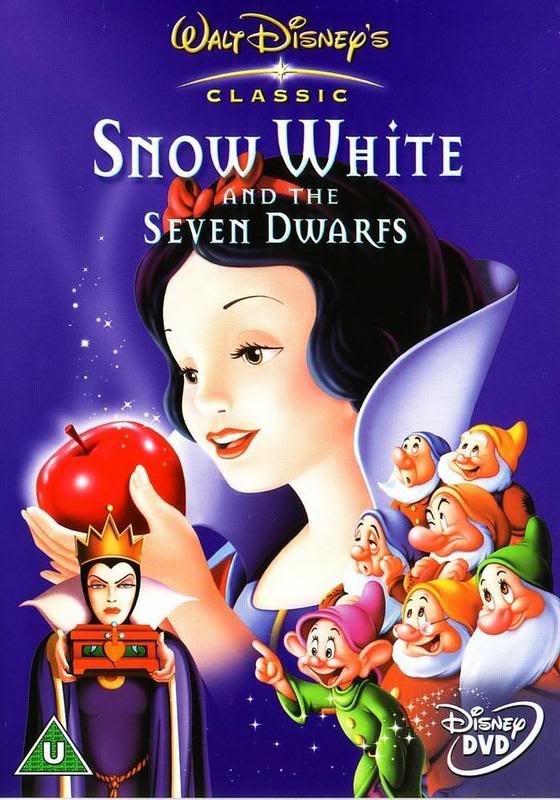
Snow White and The Seven Dwarfs


By far, one of Disney's greatest creations. The inspiring love story had a difficult road during production, but Walt's determination and love for film shined through when Snow White was aired for the first time. Based off the famous Brothers Grimm Snow White, Walt's version was sweet and classical and was the very first fully animated feature film. Snow White was created using 2D light boxes, so it was a very long journey indeed. With the production costing ten times more than the Silly Symphony series, Walt was in for hard times ahead. His brother and business partner, Roy Disney and wife Lillian trued to talk him out of it and he received critical claims throughout production by the Hollywood film industry. At one point he even had to mortgage his house because of the cost. However, Walt was going to stop at nothing for his film and his determine paid off; the film won an Academy Honorary Award; Disney received a full-sized Oscar statuette and seven miniature ones.


The most interesting story about Snow White's development was trying to find the right voice for Snow White. Walt Disney had auditioned many young girls, but found it difficult to find the right voice. It wasn't until a casting director for Disney rang renowned voice coach Guido Caselotti, in hopes that one of his students were suitable for the job. However, Caselotti's young daughter Adrianna overheard the conversation and immediately picked up the phone and sang and spoke in a young girls voice. Her father became embarrassed and ordered her off the phone, but the casting director had already asked her in for an audition. After Walt heard her, he chose her immediately for the job.

Of course, Snow White was praised for it's music too. The songs sung in the film and still sung today in many different forms and varieties, but the originals will always be top score.


Warner Brother's Cartoons


Sure Mickey Mouse was cute and fun, but there's always room for one more. Warner Brother's Studios were just as big and rivals to Disney. Their animations were as entertaining and exciting as the next big thing and WB weren't about to be beaten on the film scene. Even today, they're as big, if not bigger, than Disney; children of all ages know exactly who Bugs Bunny, Daffy Duck and Porky Pig are.


The three big faces of WB are, of course, Bugs Bunny, Daffy Duck and Porky Pig. Each just as famous as the other, they've made some of the greatest animations ever known. However, the most famous face of all, is Mr Bugs Bunny himself; although developemtn many times over the years, he is always recogniable for his fun charm and witty catch phrases.

  The following video is just one of the many hilarious moment that Bugs Bunny has to offer.

Non-Disney Hollywood

As I mentioned before in a previous entry, Mickey Mouse wasn't the first famed animated character on the scene; characters such as Gertie the Dinosaur, Felix the cat and even Betty Boop were around before Walt created his mousey friend.

Miss Betty Boop had made her mark before Mickey Mouse graced our screens; she was the ever famous 1930's sex symbol, with her won mini TV series and guest appearances in different animations such as Pop Eye:


I suppose Mickey Mouse and other Disney characters became more famous because they were more childish and their animations were targeted at audiences of all ages. Also because Walt put more of his heart and soul into his characters; with every film, you could feel the life of each characters.
Nevertheless, regardless was decade the characters were created in, not everyone can reach high level fame. Even today, there are many inspiring animations ready to be shown to the world, but only the most dedicated, heartfelt ones will be truly acknowledge.

Disney at War - 'Der Fuehrer's Face'


Walt Disney was quickly rising to fame, but at the same time World War 2 was under-way. Making films for the US military and government was his job to help spread news to all those about the war and get as many young soldiers involved as possible. Disney's studio made over 68 continuous hours of footage that became well known among the public. Der Fuehrer's Face being the most famous of them all, it featured Donald Duck on the road to become an american citizen.

Although at the time is was a great way for the army to get attention and recruits, I can't help but think that this was a risk for Disney to do. He risked being targeted for spreading animations about Germany; if the Germans found out, they may have been angered and attacked america and Disney's studio.

Nevertheless, Walt showed support for his country and the success of his animations for the army may have played an important part in winning the war.  


Early Disney


Where would animation be without the great Walt Disney?

Sure many people have contributed to the world of animation over the past century, but would animation really be as entertaining and amazing today if Walt hadn't come along? I doubt it...

We probably would have still achieved high levels with new technology, but even if he wasn't the first to bring forward famed characters such as Mickey Mouse and Donald Duck, he certainly brought forward the wonders of animation through them.

For me Walt Disney is a great inspiration; he didn't come from a rich family and was literally an ordinary guy with a big imagination, who set up his own little business for the love of it and that love for his characters and work was felt by the whole world.

Of course, Walt wouldn't be Walt without his mousey friend. Probably the most famous character in animation history, Mickey Mouse is, by far, Walt's greatest creation. Mickey has led the animation world to success; his charm, wit and cuteness is the whole package; when creating a new character, he's the one to look to. Mickey has made some of the most fun and entertaining films ever such as the ever famous and personal favourite of mine, Steam Boat Willie.


Silhouettes

Just a thought I wanted to add. I truly believe in the fact that your character is only as good as it's silhouette; if you can recognise a character by its silhouette, you have a character that will be known and recognise forever.

One of my favourite silhouettes is Petter Griffin from Family Guy because not matter what part of his body is shown, you can always recognise it's him.

Peter Pan - Before and After


Walt Disney's Peter Pan was first released in 1953 and almost 50 years later, Disney studios released a sequel called Peter Pan 2: Return to Neverland. Both films were huge successes despite being released so many years apart. One big difference between then though is that the first film took only $4'000'000 to make were as the second took $20'000'000.

The main thing I wanted to talk about here is the design, graphics and animation of both films; 50 years later and better technology, does the second film really look any better than the first?

Above you can see the difference between the two picture and most likely tell which one is from what film. The very top is the first film and the lower is the second.

Looking at this picture, there isn't much difference apart from the clearer drawings and higher definition look which, I think, is something to praise as Disney have kept all the original looks and feel about the story. The colour's may be more vibrant and Peter's outfit is slightly different coloured, but the style is still the same which is a huge plus for the film.


The first thing I want to talk about is the difference in the characters attitude and overall 'acting.' In the second film, the characters are a lot more open and involved; they act a lot more childish and you get this fun feeling every time you watch them. In the first film, although fun, they act more 'simple' and more traditional. By this I mean that back in the 50's, children were more 'behaved' and groomed at a early age to be presentable and although Peter was childish and adventurous, you cant help but notice he still has this groomed feeling about him when comparing him to the second film. I don't think was intentional, I think the main reason is because there is a big difference in the attitude between children from the 50's and children today and that reflects upon the acting of the children in the film.

The second thing is the flow of the animation. The first film definitely holds that traditional and Disney style to it    and really makes the film feel special, but the second film is more up to date and flows a lot better so the film looks more appealing.

So, is the second film better than the first?

I guess you could say yes ever so slightly, only because the flow of the animation has improved and the detail is a lot better, but the first film definitely keeps that traditional Disney feel which makes a great classic movie.

Week 3 - More on Sound

There isn't much to say this week as what I wrote last week for sound, was spoken about this week. I guess the two mostly fresh things in my mind are two videos we watched today; a little film about a cheating couple, with the actors all being insects and a remix version of Disney's Snow White called 'Wishery'.

The insect film was a humorous one; a husband who leaves for work, but actually goes drinking and cheating whilst the wife stays home and invites her lover round. Ironically, her lover is an artist and the character who reveals the cheating husband is a cameraman. The sound in the background was instrumental music all the way through; the music was carefully written and well adapted to the mini movie.


Snow White became Disney's first major Princess in an animated feature in 1937. Many people doubted the films success and tried to discourage Walt to give up it entirely, but after completion, the film went on to be the number one best animated film of the year.

The music in this film really is amazing, every tone, key and pitch are perfect and suit every scene. Even if this video is a remix version of the original songs mixed together, you can still enjoy and appreciate what Walt created many years ago. The beats that mix together with the vocals and sounds from the film create an almost '21st Century' version of the songs, but keeps true to the original music.

Snow White's voice is exceptionally suited to her character, young and sweet; being a princess, she sings almost opera style. In fact, a lot of her notes are opera like. Her voice actress was Adriana Caselotti, daughter of Guido Caselotti, a teacher of music and a vocal coach and Maria Orefice, an opera singer, so naturally, she would have a beautiful voice.

To accompany Snow White's sweet singing was the seven dwarfs and their uplifting 'cheeky' singing. Their renditions of  'Dig, Dig, Dig' and 'Hi Ho, It's Off To Work We Go' and two of the greatest songs in Disney history; they're two of the type of songs that people randomly sing today jokingly.

Snow White is one of my favourite Disney films; I prefer the older versions when they are hand drawn as everything seems in so much more detail and helps me to appreciate the long process it took to make it. The sounds and vocals are perfectly assigned to each scene making everything spectacular.


Week 1 and 2 - Early History, Blogging and Early Sound

Last week I started a blog that covers all my lessons during the week, but I'll be using this one to keep a more detailed track of my Theory and Research class.

Since I started last week, I have already written what we learnt in week 1's lesson so I'm going to use that here now.

Week 1:

Today we started our first module, From Pencil To Pixel.

We started with the definition of animation:

(Merriam-Webster) Etymology: Middle English, from Latin animatus, past
participle of animate to give life to, from anima breath, soul; akin to Old English
ōthian to breathe, Latin animus spirit, Greek anemos wind, Sanskrit aniti he
breathes.

(Chambers) liveliness; vivacity. 2 a the techniques used to record still drawings on
film in such a way as to make the images seem to move; b any sequence of these
images.
Animated Cartoon: (Merriam-Webster): a motion picture that is made from a series of
drawings, computer graphics, or photographs of inanimate objects (as puppets) and
that simulates movement by slight progressive changes in each frame.

For me, the definition of animation is to bring your imagination to life. There are ways to animate something you have found online, but to truly feel close to your animation and the joy it brings, you animate something you have created. Animating from scratch brings you closer to your work and allows you to make the most of your imagination and ideas. Early animations were incredibly enjoyable because it was a way for adults to act like children in a professional way.

We looked at some early animations from the early 1900's. They were very interesting and very funny. The animation was some of the best I have seen to be honest. Animation first came around in the early 1800's, with Peter Roget presenting his paper 'The persistence of vision with regard to moving objects' to the British Royal Society. Animation quickly became popular and the film industry was changed forever. Many famous faces created different forms and ways of projecting animation for the public to see, but it wasn't until 1895 that the first cinematograph (1) was created by Louis and Augustine Lumiere, a device capable of projecting moving images. Then 1896 when Thomas Armat designed the vitascope, the projector that shoots film onto a large screen, like in the cinema, which showed the films of Thomas Edison. This machine had a major influence on all sub-sequent projectors. Then in 1895, the first cinematograph was created by Louis and Augustine Lumiere, a device capable of projecting moving images.

(1)


In 1923, the brothers, Walt and Roy Disney founded Disney Brothers Cartoon Studio, which went on to be one of the most successful animation studios. During that year Walt extended Max Fleischer's technique of combining live action with cartoon characters in the film "Alice's Wonderland". In 1927, Warner Brothers, another extremely successful studio, created 'The Jazz Singers,' which introduced combined sound and images and in 1928 Walt Disney, who was never far behind, created the first cartoon with synchronized sound called 'Steam Boat Willy'.

All these important dates were just the beginning of what animations were to achieve and how far they would develop. Each development was as important as the other and each step taken led to today's thriving industries to produce some of the greatest animations ever created. I wanted to talk about these dates in particular because of how important they are to animation; without each of these steps happening in history, we wouldn't have the amazing animations we have today.

This is mostly what we've talked about so far on the history on animation. We also talked about blogging and why it's important to keep track and regular updates of your work. University is a very independent place of study, so it's the perfect opportunity to keep a blog; I've started keeping both this blog for my Theory and Research and another foe my other lessons and I'm happy that I am as it's allowing me to review each weeks progress and keep any lessons fresh in my mind. Also, I can share my experience and knowledge with others on the internet as I learn and I can learn from theirs too as blogging is very popular and is easily accessible.

The past two weeks have been rather interesting and it's only the start of the module. I'm sure there is plenty more to learn and although at times things may seem slow, each lesson is going to be important.

References:

Each reference used was found on 20-10-11 so I'm not aware of any changes after this date, unless stated so.

http://joshuamosley.com/UPenn/courses/Ani/AnimationHistory.html
https://blogger.googleusercontent.com/img/b/R29vZ2xl/AVvXsEjqNK0TdZuN2dwKHthmsdqOp86NfXYZ8KONM2pN66sS_raKsPLclduPqwmlDG7u4tPjVwCY7PRWPOyqF6kd67xa3W3oiACdrdy46itceK3o7jbELPvOa17sc1w8xxAw5XScTo60XO-rksw/s1600/Lumiere+Brothers+-+Picture+of+Cinematograph.png
http://magnusyear1.blogspot.com/